

 By
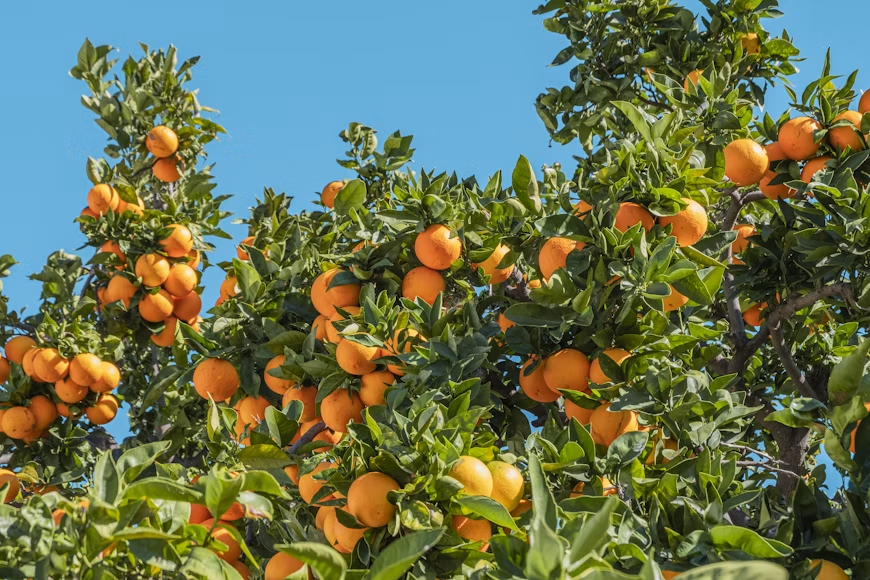
By Photo by Philippe Gauthier on Unsplash
By Peyton Lederman | The Now Daily
More than a decade of research involving Texas A&M AgriLife has helped produce a new commercial treatment for citrus greening, one of the most damaging diseases facing citrus growers.
The treatment grew out of research into a naturally occurring peptide found in spinach. Scientists discovered that the peptide showed potential against the bacteria associated with citrus greening and spent years developing the discovery into something growers could use.
Texas A&M AgriLife announced Aug. 19 that the resulting therapy is now commercially available, marking a major step for research that began more than a decade ago.
Why Citrus Greening Is Such a Serious Problem
Citrus greening, also known as Huanglongbing or HLB, has created major problems for citrus production because infected trees become less productive over time.
The disease is associated with bacteria spread primarily by the Asian citrus psyllid, a small insect that feeds on citrus trees.
Once a tree becomes infected, it can develop yellow or blotchy leaves and produce fruit that is small, misshapen or bitter. The disease can eventually cause severe decline in the tree.
Because of its impact on both fruit quality and production, researchers have spent years searching for better ways to help growers manage the disease.
The Discovery Started With Spinach
The path toward the new treatment began with research involving spinach plants.
Texas A&M AgriLife researchers identified a peptide with antimicrobial properties and began investigating whether it could help protect citrus trees against the bacteria associated with citrus greening.
That discovery eventually led to years of additional research, testing and development.
Turning an early laboratory finding into a treatment that can actually be used commercially is a lengthy process. The work involved determining how the peptide could be delivered to citrus trees and whether it could provide meaningful benefits under real growing conditions.
The commercial availability of the therapy represents the latest stage of that process.
More Than a Decade of Research
The new treatment did not appear overnight.
According to Texas A&M AgriLife, the development traces back more than a decade and involved researchers working across several areas of plant science.
That long timeline highlights the gap that can exist between discovering something promising in a laboratory and developing a product that farmers can eventually use.
Researchers had to move beyond identifying the peptide and determine whether the technology could become a practical tool against citrus greening.
The result is an example of agricultural research moving from an initial scientific discovery toward a product intended for real-world use.
What It Could Mean for Citrus Growers
A new treatment option could be significant for growers dealing with citrus greening, but it does not mean the disease has suddenly disappeared.
Managing HLB has traditionally required growers to use several strategies, including controlling the insects that spread the disease and carefully managing infected trees.
The new therapy adds another potential tool to that effort.
Its commercial availability is especially notable because citrus greening has proven extremely difficult to manage once it becomes established.
How the treatment performs across different growing regions and over longer periods will be important as growers begin incorporating it into their disease-management programs.
Agricultural Research Moves Into the Field
The development also shows how agricultural research can take years before reaching farmers.
A discovery involving a peptide from spinach eventually became part of an effort to address a disease threatening an entirely different crop.
For Texas A&M AgriLife researchers, the commercial release represents a milestone after years of work on citrus greening.
For growers, the more important question will now be how effectively the treatment performs in commercial citrus operations.
The disease remains a major challenge, but the arrival of another management option gives producers a new tool in the continuing effort to protect citrus trees and maintain production.
Sources
- Texas A&M AgriLife Today — “Spinach peptide discovery leads to citrus greening treatment,” Aug. 19, 2026
- Texas A&M AgriLife — Citrus Greening Research and Disease Information