

 By
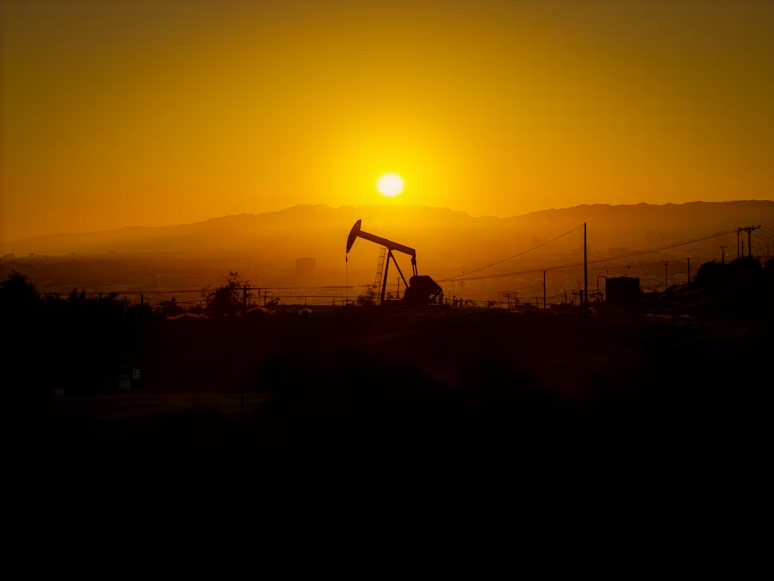
By Photo: Nils Huenerfuerst / Unsplash
By Peyton Lederman | The Now Daily
Texas regulators issued 750 original drilling permits in June 2026 as oil and gas development continued across the state, with the Midland region accounting for nearly half of the permits issued for new oil and gas wells.
Data released by the Railroad Commission of Texas shows that 686 of the month’s original permits were issued to drill new oil or gas wells. The remaining permits covered recompletions, re-entry into plugged wellbores, a field transfer and a reclassification.
Texas Issued 750 Original Drilling Permits
The Railroad Commission reported 750 original drilling permits during June.
Of those, 686 authorized new oil or gas wells. Another 56 were issued for recompletions, six involved re-entering plugged wellbores, one involved a field transfer and one was a reclassification.
By well type, the Commission classified 146 permits as oil, 60 as gas and 496 as combined oil and gas. Another 32 were for injection wells, while 16 fell into other categories.
The figures provide a monthly snapshot of permitting activity across one of the country’s largest oil and natural gas producing states.
Midland Region Dominated New-Well Permitting
Railroad Commission District 8, which covers the Midland region and a large portion of the Permian Basin, accounted for 324 permits to drill new oil or gas wells during June.
That was approximately 47% of the 686 new-well permits issued statewide.
No other Railroad Commission district came close to Midland’s total.
The San Antonio area recorded the second-highest number with 115 new-well permits, followed by the Refugio area with 57 and the San Angelo region with 52.
The numbers illustrate how heavily current Texas drilling activity remains concentrated in West Texas, particularly within the Permian Basin.
Permian Basin Remains Central to Texas Energy
The Permian Basin has remained one of the most important oil-producing regions in both Texas and the United States.
June’s permitting numbers provide another indication of the region’s continuing role in new development.
District 8 recorded 324 permits for new oil and gas holes, while neighboring District 8A, which covers the Lubbock-area portion of the oil-producing region, recorded another 21.
The San Angelo-area District 7C also reported 52.
Together, those three West Texas districts accounted for 397 of the state’s 686 permits to drill new oil and gas wells during June.
South Texas Also Recorded Significant Activity
New drilling was not limited to West Texas.
The Railroad Commission’s San Antonio district recorded 115 new oil and gas drilling permits, making it the second-busiest district in the state during June.
The Refugio district recorded another 57.
Other parts of Texas saw considerably smaller totals. East Texas recorded 38 permits, Southeast Texas had 21, North Texas had 19 and Deep South Texas had 13.
The Panhandle recorded just two permits to drill new oil or gas wells during the month.
June Permits Were Similar to Recent Months
June’s 750 original permits were close to the totals reported during the previous two months.
The Railroad Commission issued 753 original drilling permits in May and 752 in April.
The number of permits specifically issued for new oil or gas wells increased from 655 in May to 686 in June. April’s total stood at 661.
Those figures show statewide permitting remaining relatively steady during the three-month period, even as the distribution of activity among individual regions changed.
Permits are an indicator of planned development, but receiving a drilling permit does not necessarily mean a well will immediately be drilled or begin producing.
Commission Processed More Than 1,800 Completion Reports
Drilling permits were only part of the Railroad Commission’s June activity.
Commission staff also processed 965 oil completion reports, 739 gas completion reports and 127 injection completion reports during the month.
Those figures require an important distinction.
The Railroad Commission notes that its monthly completion statistics represent reports processed during the reporting period, rather than necessarily representing wells physically completed during that exact month.
That distinction is important when comparing permit and completion figures or using the monthly reports to evaluate current drilling activity.
Midland Also Led New Oil Completions
District 8 led Texas in new oil completion reports during June with 300, according to the Commission’s district-level figures.
The San Angelo region followed with 99.
Statewide, the district table identified 494 new oil completions and 210 new gas completions.
Midland also recorded 67 new gas completions, the largest total among the state’s districts. East Texas followed with 46, while the San Antonio region recorded 30.
The geographic differences reflect the varying mix of oil and natural gas development across Texas producing regions.
Why Drilling Permits Matter
Drilling permits offer one way to track where operators are preparing for potential new development.
Before drilling certain oil or gas wells in Texas, operators must obtain authorization through the Railroad Commission. The resulting permit data can therefore provide an early look at where companies are directing drilling plans.
However, permit totals should not be treated as a direct measurement of oil production.
Production depends on whether permitted wells are ultimately drilled and completed, how productive those wells are, commodity prices, company spending decisions and numerous other factors.
For that reason, permit data are most useful when considered alongside completion, production and market information.
Texas Makes Detailed Drilling Data Public
The Railroad Commission publishes monthly drilling, completion and plugging summaries that provide considerably more information than the headline statewide totals.
The agency also maintains downloadable drilling permit datasets and updates some drilling information on a daily or monthly basis.
Those records allow operators, researchers and members of the public to examine activity beyond statewide totals, including individual permits and geographic patterns.
The Now Daily will continue following those records as part of our coverage of Texas energy, oil and gas development and the economic activity surrounding the state’s energy industry.
Sources Consulted
- Railroad Commission of Texas — Texas Drilling Permit and Completion Statistics for June 2026
- Railroad Commission of Texas — Monthly Drilling, Completion and Plugging Summaries
- Railroad Commission of Texas — Drilling Permit Data
- Railroad Commission of Texas — May 2026 Drilling Permit and Completion Statistics