

 By
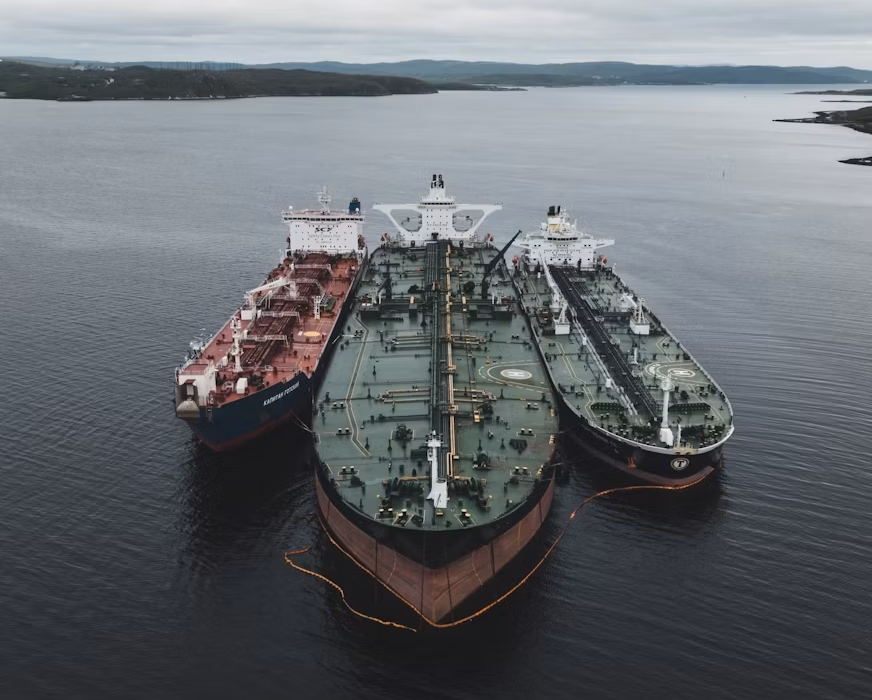
By Photo by Natalya Letunova on Unsplash
By Peyton Lederman | The Now Daily
U.S. liquefied natural gas exports have climbed to record levels in 2026, strengthening the country’s position in the global energy market. But rising natural gas prices and changing demand overseas could make it harder for exporters to maintain that pace through the remainder of the year.
The situation is particularly important for the Gulf Coast, where LNG facilities have become a major link between U.S. natural gas production and buyers in Europe and Asia. Those markets remain heavily dependent on imported gas, making changes in global supply and prices increasingly important for American producers and exporters.
U.S. LNG Exports Continue to Grow
U.S. LNG exports increased roughly 23% from a year earlier through July, according to Reuters. Global supply disruptions and reduced shipments from Qatar have helped increase demand for American LNG, particularly in Europe and Asia.
The U.S. Energy Information Administration said in its August Short-Term Energy Outlook that it expects U.S. LNG exports to average about 16.5 billion cubic feet per day during the third quarter of 2026. The continued expansion of LNG infrastructure has allowed the United States to send larger quantities of domestically produced natural gas into the international market.
Higher Prices Could Slow Demand
Strong demand does not necessarily mean exports will continue rising without resistance. Natural gas prices in major overseas markets have increased as buyers compete for available LNG cargoes. Reuters reported that prices in Asia are expected to exceed $22 per million British thermal units, while European prices could reach similar levels during the fourth quarter.
Those prices could cause some buyers to reduce purchases or delay filling storage. Europe has also continued expanding renewable power and electrification, creating another long-term challenge for natural gas demand. For U.S. exporters, the question is increasingly whether international demand can grow fast enough to absorb additional American LNG production.
Texas Remains at the Center of the LNG Expansion
Texas and the broader Gulf Coast remain central to America’s LNG industry because of their extensive natural gas production, pipeline networks and access to export terminals. Growth in LNG exports can create additional demand for natural gas produced throughout Texas and neighboring states.
That connection also means global events can have a greater influence on domestic natural gas markets. Supply disruptions overseas, European storage levels and Asian demand can ultimately affect prices and production decisions thousands of miles away in Texas. As additional LNG export capacity comes online, that relationship between Texas energy production and international markets is likely to become even stronger.
What Comes Next
The next several months could show whether record U.S. LNG exports represent another step in sustained growth or whether high prices begin limiting international demand. Weather will also remain an important factor because colder temperatures could increase heating demand in Europe and Asia.
For American energy producers, strong LNG exports provide another major market for domestic natural gas. At the same time, continued expansion depends on overseas customers being willing to pay prices that make U.S. shipments economical. The balance between production, export capacity and global demand will remain one of the biggest issues facing the natural gas industry heading into 2027.
Sources:
U.S. Energy Information Administration — Short-Term Energy Outlook, Natural Gas, August 11, 2026.
Reuters — “U.S. LNG exports set for endurance test as high gas prices bite,” August 24, 2026.