

 By
By By Lily Lederman | The Now Daily
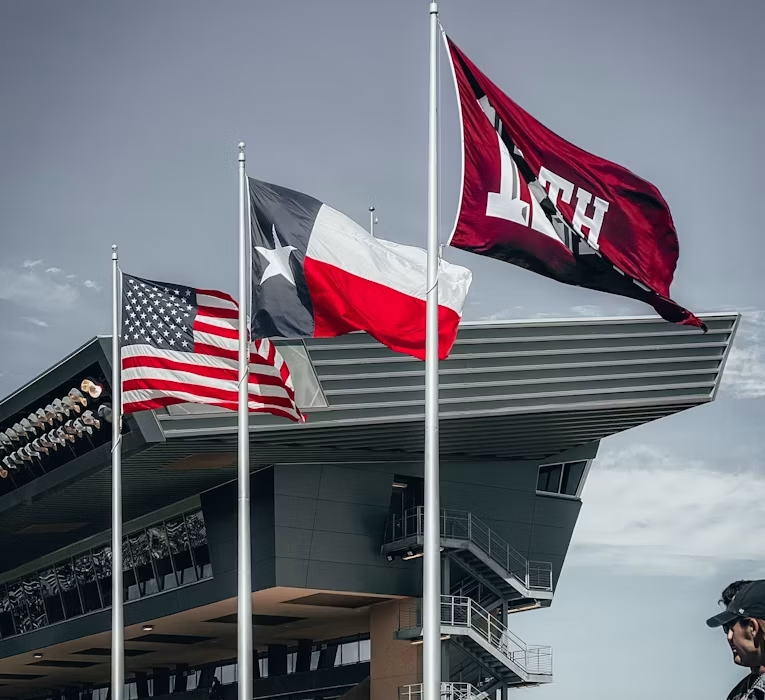
Football season in College Station brings more than packed stands at Kyle Field. It also brings a transportation challenge that spreads across much of the city.
College Station is preparing its traffic-control operation for the 2026-27 football season, using more than 100 city-operated cameras, two control centers and coordination between several local and state agencies.
With seven Texas A&M home games scheduled and a potential playoff game, residents should expect traffic patterns to change repeatedly throughout the season. Behind those changes is a system that has been developed over more than a decade to move thousands of vehicles through College Station before and after games.
More Than 100 Cameras Help College Station Manage Traffic
College Station maintains and operates more than 100 traffic cameras through two control centers, excluding cameras located along Highway 6. The network gives transportation staff a wider view of congestion as thousands of vehicles move through the city.
Those cameras are connected through the city’s fiber network, allowing staff to monitor conditions in real time. As older cameras are replaced, College Station is adding models capable of detecting vehicles, buses and pedestrians using artificial-intelligence technology. City officials say the system is intended to manage traffic rather than monitor individual drivers. The cameras used for these operations do not record or track individual vehicles or people, according to Senior Traffic Engineer Randell Smith.
Game-Day Traffic Requires Several Agencies Working Together
Managing traffic around Kyle Field requires more than College Station employees. The city coordinates with Texas A&M University, College Station police, Bryan, the Texas Department of Transportation and the Texas A&M Transportation Institute during major events.
That cooperation gives transportation staff another way to respond when congestion develops. Engineers working in the control center can communicate with police officers in the field when traffic patterns need to change. If you’re driving through College Station after a game, some of the directions you encounter are part of this coordinated operation. Game-day traffic operations generally last around four hours, while crews aim to complete traffic changes and equipment removal within about two hours after games.
College Station Has Used Its Traffic Plan for About 12 Years
The traffic-control plan College Station uses for major football crowds did not appear overnight. According to Smith, the basic operation has been in place for roughly 12 years, with adjustments made each year to improve how traffic moves.
That experience matters because Texas A&M football creates predictable congestion on a scale most communities do not regularly handle. Returning fans may understand where traffic is normally directed after games, while first-time visitors may be unfamiliar with temporary routes. The city can use what it learns during each season to adjust future operations. New camera technology and additional research are also giving transportation officials more information as they continue updating the system rather than relying entirely on the original traffic plan.
Seven Home Games Will Put the System to Work
Texas A&M has seven home football games scheduled for the upcoming season, and a potential playoff game could add another major event to College Station’s calendar. Each one will require the city to manage a sudden increase in vehicles before and after the game.
For residents, the effect reaches beyond the roads immediately surrounding Kyle Field. Large crowds can influence traffic throughout College Station as visitors arrive at hotels, restaurants, parking areas and other destinations. Knowing the football schedule can help you plan trips around the busiest periods. City traffic crews will monitor every home game, making adjustments when necessary as vehicles move through the area. The operation continues before, during and after fans leave the stadium.
Large Events Are Creating Traffic Challenges Outside Football Season
Texas A&M football remains a major source of traffic, but College Station is increasingly managing large crowds at other times of the year. Smith pointed to summer events such as the Savannah Bananas game as another example of the city’s growing transportation demands.
Those events can create a different challenge because visitors may have less experience with College Station roads than regular Aggie football fans. Someone attending a one-time event may not know why traffic is being redirected or why vehicles are temporarily moving through unusual routes. Transportation officials have made adjustments to account for those situations. As College Station hosts more major events outside football season, the city’s traffic-management operation is becoming closer to a year-round responsibility.
What Drivers Should Expect During Aggie Game Days
If you’re traveling through College Station on a Texas A&M home-game weekend, planning ahead can save you time. Roads that normally work well for everyday travel may operate differently when tens of thousands of visitors arrive in the city.
Drivers should expect temporary traffic changes, police direction and heavier congestion around major routes. Those changes are designed to move large numbers of vehicles away from crowded areas efficiently rather than maintain normal traffic patterns. The city will continue monitoring conditions through its camera network while crews and law enforcement respond on the ground. For local residents who are not attending the game, checking kickoff times and completing trips before crowds arrive or after traffic clears can make navigating College Station considerably easier.
Source: Community Impact reporting on College Station game-day traffic